
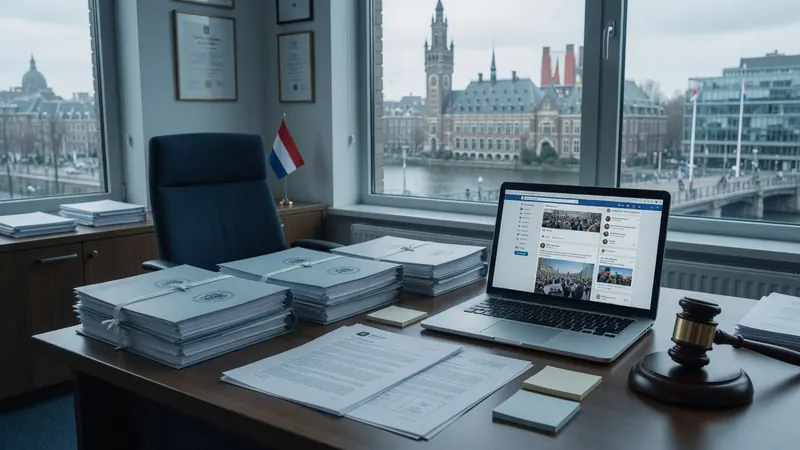
Dutch gambling authority Kansspelautoriteit has signalled it is ready to take legal action against major technology platforms over advertising for unlicensed gambling operators, while also working with Google on a whitelist of approved licensees. The message came from KSA chair Michel Groothuizen in a blog post marking five years since the online market was re-regulated, according to SBC News. The escalation follows a lawsuit by licensed operator trade body VNLOK against Meta. The issue matters because VNLOK estimates that nine out of ten gambling adverts on Facebook in the Netherlands relate to illegal operators, even as Groothuizen says roughly 90 per cent of Dutch online gamblers use only legal sites.
Prepared for cooperation or confrontation
Groothuizen said the regulator wants tech platforms to restrict adverts for unlicensed gambling, preferably through voluntary agreements but backed by enforcement if needed. He explained that advertising revenue from illegal operators is valuable to the platforms, so asking them to curb it works against their commercial model. Speaking to NEXT.io, he said the KSA wanted change “preferably amicably, if necessary by force.” Groothuizen added that a sheriff who misses, or who is armed only with a toy gun, gives troublemakers a free pass. The regulator has said that all routes to seek responsibility remain open, including a legal case if voluntary efforts prove insufficient.
Google whitelist still undefined
The KSA and Google have formed a joint task force after meetings in Dublin earlier this year with Google and Meta at their European headquarters. Under the proposal, Google would use a list of operators licensed in EU countries to identify and block advertising by those not on the list. The regulator has not said when the whitelist would start operating or which Google advertising services or channels it would cover. It is also not clear how a European list would handle the fact that a licence in one member state does not automatically allow an operator to target consumers in another. Google already applies country-specific advertising certification for gambling in several European markets.
VNLOK case against Meta
The Dutch online gambling trade body VNLOK is pursuing Meta through the courts. The case is now in its final stage and Meta has been summoned to appear in Amsterdam. VNLOK's analysis found that 90 per cent of gambling advertisements on Facebook in the Netherlands promote illegal operators. Björn Fuchs, chair of VNLOK, said: “It’s extremely disappointing to see the lack of (pro)activity at Meta.”
Figures show split between legal and black market
Groothuizen cited figures indicating that around nine in ten Dutch online gamblers use only legal sites. At the same time, only 53 per cent of money moving through the Dutch gambling industry is staked with the legal market. The KSA believes the difference arises because players who use black-market sites tend to lose more, with fewer protections in place.
Frustration over unpaid fines
The KSA's shift towards platforms follows limited success with conventional penalties. Groothuizen admitted that fines imposed on unlicensed operators often went unpaid because the regulator could not easily collect them. In response, the KSA has moved to disrupt the infrastructure supporting illegal gambling, including payments and visibility in search results and social media. Groothuizen said social media adverts for unlicensed gambling reached minors and people who had already self-excluded.
Litigation could take five years
Groothuizen said Dutch law and the EU Digital Services Act could offer grounds for action against platforms facilitating offshore gambling ads, but enforcement of the DSA would probably sit with the European Commission rather than the KSA. He estimated a legal route could stretch to five years. He added that the current cooperation with tech companies should not be seen as a permanent arrangement. The chair said the regulator would not hesitate to take a platform to court if voluntary agreements yield too little.